
Smart Door Lock Systems for Homes, Apartments & Commercial Projects
Discover smart door lock systems designed for secure, keyless access across residential and commercial environments. These solutions cover biometric locks, digital door locks, and integrated smart access technologies used in modern buildings and access control systems.
Why Smart Door Lock Systems Are Replacing Traditional Locks
Efficient Access Management
Manual key-based access management increases operational complexity and security risks, while smart door lock systems enable centralized, secure, and efficient access control.
Multi-Scenario Compatibility
Different door types and usage scenarios are difficult to manage with traditional locks, whereas smart door lock systems support wide door compatibility and flexible access methods.
Security & Risk Reduction
Mechanical locks alone cannot address modern security challenges, but smart door lock systems enhance protection through authentication, monitoring, and anti-tamper mechanisms.
System Integration & Scalability
Standalone locking devices limit long-term scalability, while smart door lock systems integrate with access control platforms, property management systems, and smart building infrastructure.
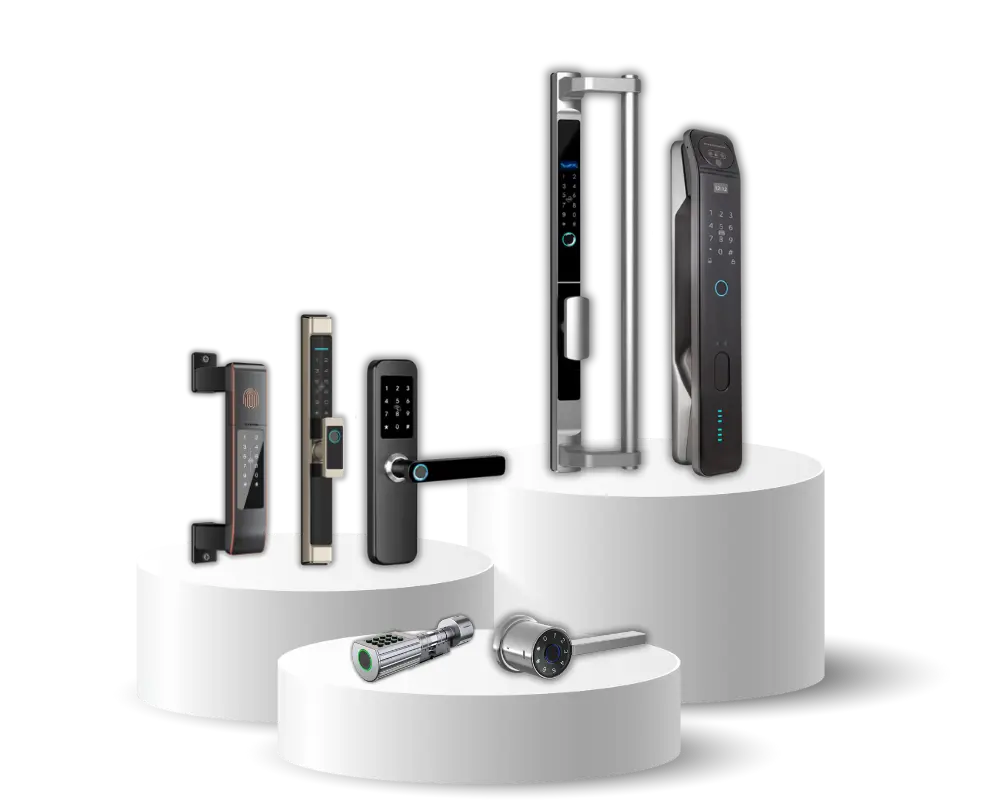
Smart Door Lock Series for Different Door Types & Applications

Designed for profile doors with IP65 protection, 85mm center distance mortise lock cases, and multiple unlocking options for residential and commercial installations.

Full outdoor smart locks engineered for gates, fences, and courtyard entrances, featuring CNC-machined aluminum bodies and wide temperature tolerance.

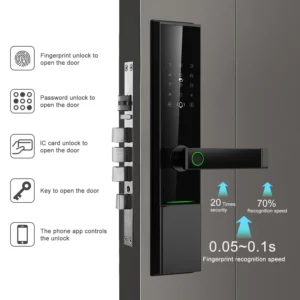
Heavy-duty smart locks for villa doors, steel doors, and reinforced home entrances, offering high security and multi-method unlocking.

Premium smart locks built for armored doors, premium steel doors, and high-end residential units requiring enhanced structural strength.

Heavy-duty hardwired smart locks running on stable 9V/12V DC power, permanently eliminating battery maintenance for luxury villa access and high-end armored doors.

Minimalist smart handle locks designed for bedrooms, offices, and interior spaces with various unlocks and silent motor drive.

Smart cylinders, keypad and deadbolt locks that upgrade existing mechanical locks without replacing the entire lock structure.

Special-purpose smart locks suitable for glass doors, interior partitions, and commercial entry systems.
Smart Door Lock Recommendation

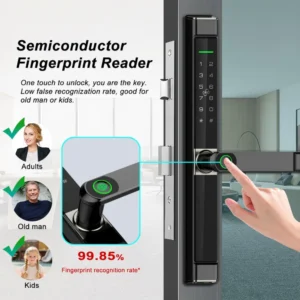
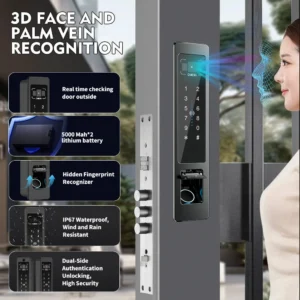
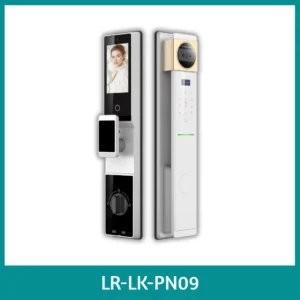
Smart Lock for Sliding Glass Doors for Residential & Commercial Use
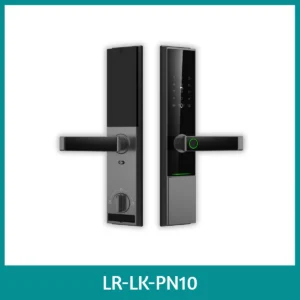
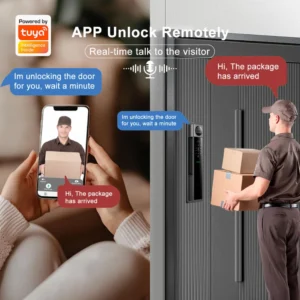
Weatherproof Smart Lock for Residential Front Doors
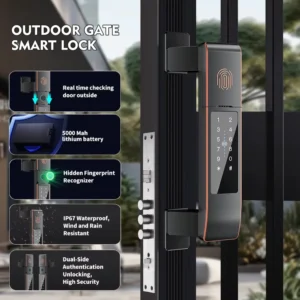
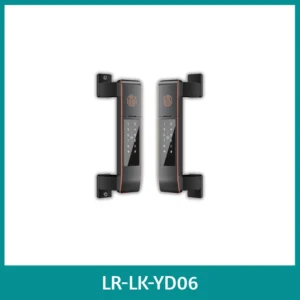
Smart Lock for Fence Gates for Outdoor Fencing Systems
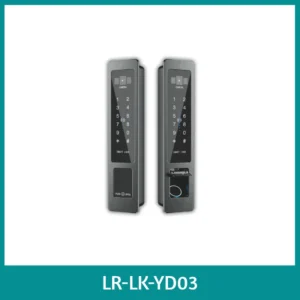
LR-LK-YD03 Smart Lock for Outdoor Gates with Weatherproof Design
Smart Lock for Metal Security Doors
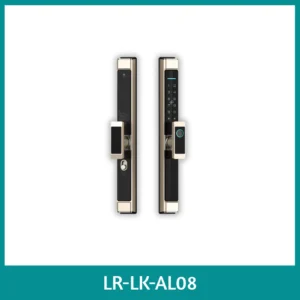
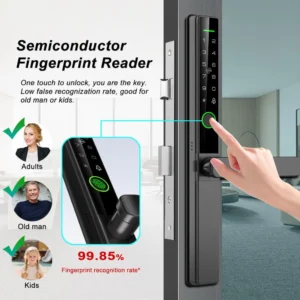
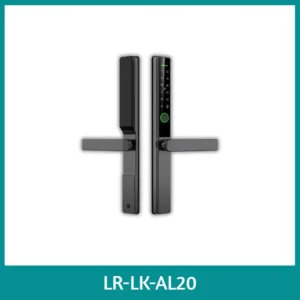
Slim Smart Lock for Aluminum and Narrow Frame Doors
Smart Door Lock Project Collaboration Workflow
Pilot Proposal
A tailored pilot proposal outlining techniques required, pricing options, and a clear roadmap to ensure full alignment before sampling.
Sample Approval
Samples produced according to confirmed specifications for functional testing, design refinement, and final approval before mass production.
Production & Schedule
Optimized production planning with transparent scheduling, stable lead times, and continuous updates to keep your project on track.
Quality Inspection
Strict multi-step quality inspections covering materials, assembly, and performance to guarantee every expected standards.
Packaging & Shipping
Secure export-grade packaging and coordinated global shipping solutions to ensure safe delivery and smooth customs clearance.
high-traffic commercial. Full OEM/ODM technical support.
Core Features of LEROND Smart Door Lock Systems
Multi-Method Smart Access
Supports fingerprint, PIN code, NFC card, mechanical key, app control, and optional face or palm-vein biometrics for flexible user management.
Wide Door Compatibility
Designed for aluminum profile doors, wooden doors, patio doors, security doors, glass doors and various mortise standards across global markets.
Stable Connectivity & Integration
Compatible with Bluetooth, Wi-Fi, Zigbee, TTLock in gateway cloud control, ensuring smooth integration into home and commercial keyless automation systems.
High Security & Anti-Tamper
Features encrypted communication, anti-pry structure, secure authentication, electronic auto-locking, and intrusion detection for enhanced digital door security.
All-Climate Design & Durability
Achieves up to IP68 weatherproof performance with optional -40°C to 80°C operation, ensuring reliability for outdoor, garden, and gate applications.
Long-Life Lithium Battery Power
Equipped with rechargeable lithium batteries, optimized power consumption, emergency charging port and smart alerts for low-battery management.
Frequently Asked Questions
What door materials are compatible with smart door locks?
Smart door locks can be installed on a wide range of door materials, including wooden doors, aluminum profile doors, steel security doors, and certain types of glass doors. Compatibility mainly depends on the lock body structure, door thickness, and the available installation space for electronic components. Different lock series are often designed specifically for different door structures.
Are smart digital door locks safe from hacking or signal interference?
Modern smart locks use several security layers to reduce hacking risks.
Common protection technologies include:
AES encrypted communication
Secure BLE pairing
Dynamic password systems
Tamper alarms
Anti-brute-force lockout mechanisms
For high-security environments, smart locks may also integrate:
Biometric authentication
Secure element chips
Encrypted cloud communication
For more details, you can check the guide to EMI impact and wireless signal stability in smart locks.
How long do smart door lock batteries typically last?
Battery life depends on the lock’s motor design, standby consumption, and unlocking frequency.
For most commercial smart door locks:
Alkaline batteries: 6–10 months average usage
Lithium batteries: 10–18 months lifespan
Rechargeable lithium packs: 6–12 months per charge cycle
Locks with WiFi connectivity typically consume more power than BLE-only models.
For large deployments such as apartments or offices, choosing low-power chipsets and sleep-mode firmware can significantly extend operational lifespan.
👉 Related topic: Battery Types for Smart Door Locks
What authentication methods are commonly used in smart door lock systems?
Modern smart door locks typically support multiple authentication methods, including fingerprint recognition, PIN codes, RFID cards, mechanical keys, and mobile app access. Some advanced models may also include facial recognition or palm vein identification. Combining several authentication options improves convenience while providing backup access methods in case one method becomes unavailable.
Can smart door locks be installed on existing doors without replacing the entire door?
Yes, many smart locks are designed for retrofit installation on existing doors. As long as the door structure supports a compatible mortise lock body and sufficient installation space, a traditional mechanical lock can often be replaced with a smart lock system without changing the entire door panel. Proper measurement of backset, door thickness, and handle spacing is essential before installation.
What is the difference between semi-automatic and fully automatic smart door locks?
Semi-automatic smart locks require the user to manually push or pull the handle after authentication to retract the latch. Fully automatic locks use an internal motor to automatically retract or extend the locking mechanism after verification. Fully automatic systems typically provide greater convenience, while semi-automatic locks often offer simpler structure and longer battery life.
Can smart door locks be used for outdoor gates or exposed environments?
Some smart door locks are specifically designed for outdoor use and include weather-resistant construction and higher IP protection ratings. These models are commonly used on garden gates, villa entrance gates, or perimeter pedestrian gates. For outdoor installations, it is important to choose locks with strong sealing design, corrosion-resistant materials, and wide operating temperature ranges.
How do I choose the right smart door lock for different door types?
The correct model depends on door structure, thickness, mortise type, and installation environment. For example, slim aluminum doors often require narrow body locks, while security doors may require heavy-duty mortise locks.
What factors should buyers consider when selecting smart door lock solutions?
Key factors include product reliability, certification support, OEM capability, stable supply chain, firmware customization, and after-sales technical support.
What international certifications do smart door locks usually require?
For international distribution, smart locks often require compliance certifications.
Common certifications include:
Electrical & Safety
CE (Europe)
FCC (USA)
RoHS
Security or quality standards may include:
ANSI/BHMA grading
EN lock standards
IP weather resistance ratings
Certifications ensure the lock meets regional regulatory and safety requirements.
Do smart locks comply with data security or privacy regulations?
Many modern smart locks follow secure communication standards and may support compliance with GDPR or regional data-security frameworks depending on the software ecosystem used.
Do LEROND smart door locks support integration with access control or gateways?
Yes. Selected models can integrate with smart home gateways, building access control systems, or third-party IoT platforms depending on protocol compatibility.
What OEM/ODM options are available?
We support ID design, color customization, branding, mold development, firmware adaptation, and protocol customization for distributors and integrators.
Can samples be provided for testing before bulk orders?
Yes. Samples are available for testing hardware compatibility, lock case fitment, waterproof performance, and app integration.
What is the typical lead time for smart door lock manufacturing?
Lead times vary depending on order size and customization level. Standard models usually require 1–4 weeks, while customized OEM orders may take longer.
Smart Door Lock Systems – The Definitive Guide for Modern Residential & Commercial Security
Smart door lock systems come in many forms—including digital door locks, biometric smart locks, keyless entry systems, and app-controlled electronic locks. This definitive guide provides a structured breakdown of how smart door lock systems work, covering system architecture, access technologies, installation considerations, and real-world deployment scenarios. Designed for door manufacturers, distributors, installers, and project developers, this guide helps you understand how to select, integrate, and scale smart lock solutions across residential, multi-family, and commercial applications.
Executive Overview
Smart door lock systems are rapidly evolving from standalone access devices into integrated components of modern building infrastructure. As residential developments, smart communities, and mixed-use properties adopt connected technologies, digital access control is becoming a fundamental requirement rather than a premium feature.
Early generations of smart locks focused primarily on convenience—keyless entry, PIN codes, and mobile unlocking. Today, however, smart door lock systems operate as part of broader security and building automation ecosystems. Modern solutions integrate biometric authentication, encrypted wireless communication, and cloud-based access management—enabling centralized control and scalable access management across single properties or multi-site deployments.
At the system level, smart door locks are no longer evaluated as isolated hardware products. Instead, they are considered within a complete architecture that includes hardware design, communication protocols, cloud infrastructure, and third-party system integration. This shift is especially critical in projects where interoperability and long-term system stability are essential.
At the same time, the commercial procurement landscape has evolved significantly. Distributors, developers, and system integrators are moving beyond price-driven sourcing and are increasingly evaluating solutions based on installation compatibility, compliance, and lifecycle reliability. Poor system design or integration mismatches can lead to high failure rates and increased operational risks at scale.
For door manufacturers, integrating smart locks is no longer just a product upgrade—it is a strategic decision impacting positioning and competitiveness across both residential and commercial markets.
This guide is structured to help decision-makers understand smart door lock systems from both a technical and commercial perspective. The following sections provide a complete framework for selecting, integrating, and scaling smart lock solutions in modern building environments.
What Is a Smart Door Lock System
A smart door lock system is an electronically controlled locking system that combines mechanical lock structures with digital authentication and electronic actuation, allowing doors to be unlocked and managed without traditional physical keys. Unlike conventional locks that rely purely on mechanical operation, smart door lock systems integrate multiple access methods such as biometrics, PIN codes, RFID cards, and mobile applications, enabling flexible and programmable access control.
How a Smart Door Lock System Works
At a system level, a smart lock consists of three core layers:
- Authentication layer (fingerprint, password, card, app)
- Control system (PCB, firmware, communication modules)
- Mechanical execution system (motor, gearbox, clutch, latch/deadbolt mechanism)
When a user is authenticated, the control system sends a signal to the internal motor, which drives the gearbox and clutch mechanism to retract the latch or deadbolt, allowing the door to open.
From Mechanical Lock to Intelligent Access System
Traditional locks provide only passive security, relying on physical keys that can be lost, duplicated, or stolen. In contrast, smart door lock systems enable active and programmable access control, allowing administrators or users to define who can enter, when, and under what conditions. This shift introduces capabilities such as temporary access codes, remote unlocking, access logs, and integration with broader smart home or building management systems.
Why Smart Door Locks Are More Than Just “Locks”
Modern smart door locks are not standalone devices—they are part of a larger access control and security ecosystem. They interact with other devices such as video doorbells, surveillance systems, and smart home hubs to provide centralized control and enhanced security visibility. At the same time, their performance depends heavily on internal engineering factors such as material selection, battery architecture, structural design, and internal wiring reliability, which directly impact durability, safety, and long-term performance.
Related Ultimate Guides
- Mortise vs Cylindrical Smart Lock
- Smart Lock Core Components & Working Mechanism
- Smart Door Lock Material Selections
- Smart Lock Battery Architecture: Lithium vs Alkaline Battery
- Door Thickness & Backset Compatibility in Smart Locks
- Smart Lock Gearbox: Torque Transmission & Failure Points
- Clutch Mechanism in Smart Door Locks
- Deadbolt vs Latch Mechanism in Smart Locks
- Anti-Tamper Structural Design in Smart Door Locks
- Waterproof Sealing Design in Outdoor Smart Locks
- Smart Lock Handle Load Testing & Mechanical Fatigue Analysis
- Smart Lock Internal Wiring Layout: Reliability & Failure Prevention
System Architecture of Smart Door Lock Systems
Smart door lock systems are designed as integrated multi-layer architectures that combine mechanical security with electronic control, authentication technologies, and communication systems. Understanding this architecture is essential for evaluating system performance, integration capability, and long-term reliability. At a system level, a smart door lock can be divided into four core layers:
- Mechanical execution layer (lock body, latch/deadbolt, transmission structures)
- Electronic control layer (PCB, firmware, motor control system)
- Authentication & interaction layer (fingerprint, PIN, RFID, mobile app, face recognition)
- Communication & integration layer (Bluetooth, Wi-Fi, Zigbee, cloud platforms, API integration)
These layers work together to authenticate users, process access logic, and physically actuate the locking mechanism—forming a complete smart access control system.
Mechanical Execution Layer
At the foundation of the system is the mechanical lock body, which provides physical security and structural reliability. This includes components such as the latch or deadbolt, internal transmission structures (gearbox, clutch), and mounting hardware. Structural design directly impacts durability, installation compatibility, and resistance to forced entry. Variations such as mortise and cylindrical locks, as well as material selection (aluminum alloy, zinc alloy, stainless steel), play a key role in defining performance across different residential and commercial applications.
Electronic Control Layer
The electronic control layer is responsible for processing authentication signals and controlling motor actuation. It includes the control board (PCB), embedded firmware, and power management system. Once a user is authenticated, the system activates the internal motor, which drives the transmission mechanism to retract the latch or deadbolt. Differences in motor design, control logic, and automation mode (fully automatic vs semi-automatic) significantly affect user experience and system reliability.
Communication & Integration Layer
Smart door locks increasingly function as connected devices within broader ecosystems. This layer enables wireless communication, remote control, and system integration. Typical communication technologies include Bluetooth, Wi-Fi, and Zigbee, as well as wired solutions in certain commercial environments. Integration with cloud platforms and third-party systems allows features such as remote unlocking, access logs, and centralized management across multiple devices or properties. At this level, system architecture decisions also impact platform dependency, data flow, and long-term scalability—especially for distributors and system integrators evaluating different ecosystem strategies.
Architecture as a Decision Framework
Rather than viewing smart locks as standalone products, understanding their system architecture provides a framework for evaluating compatibility, scalability, and lifecycle performance. For manufacturers, distributors, and project developers, architectural considerations directly affect installation complexity, integration feasibility, and long-term operational costs. A well-designed system ensures that mechanical reliability, electronic stability, and communication robustness are aligned to deliver consistent performance in real-world environments.
Related Ultimate Guides
- Smart Door Lock Communication Protocols Explained
- Fingerprint vs Face Recognition in Smart Door Locks
- Smart Lock vs Traditional Lock: Technical & Security
- Fully Automatic vs Semi-Automatic Smart Door Locks
- Comparison of Smart Door Lock Unlock Methods
- Wireless Controlled vs Wired Controlled Smart Lock
Types of Smart Door Lock Systems
Smart door lock systems can be categorized in multiple ways depending on door structure, installation scenario, unlocking method, and communication technology. Understanding these classification frameworks is essential for selecting the right solution for different residential and commercial applications. At a practical level, smart lock types can be grouped into four major categories:
- By door structure compatibility (aluminum profile doors, wooden doors, steel security doors, glass doors)
- By installation scenario (new construction vs retrofit/renovation projects)
- By access and unlocking methods (fingerprint, PIN code, RFID card, mobile app, face recognition)
- By communication and connectivity (Bluetooth, Wi-Fi, Zigbee, wired systems)
Each category reflects a different dimension of system design and directly impacts installation feasibility, user experience, and integration capability.
Smart Locks by Door Type Compatibility
One of the most critical classification dimensions is the type of door the lock is designed for. Different door materials and structures introduce unique constraints in terms of door thickness, mounting space, and lock body compatibility. For example, aluminum profile doors often require slim lock bodies and specialized mounting structures, while wooden or steel doors allow for more flexible configurations. Selecting a lock that matches door specifications is essential to avoid installation issues and long-term performance risks.
Smart Locks by Installation Scenario
Smart locks can also be categorized based on whether they are used in new construction projects or retrofit (renovation) scenarios. In new developments, smart locks are typically integrated into the building design from the beginning, allowing standardized door specifications and system integration. In contrast, retrofit projects must adapt to existing door structures, which may require adjustable components or specialized installation solutions.
Smart Locks by Access & Unlocking Methods
Another key classification is based on how users interact with the lock system. Common unlocking methods include fingerprint recognition, PIN codes, RFID cards, mobile apps, and facial recognition. Each method offers different trade-offs in terms of security, convenience, and environmental adaptability. For example, biometric methods provide higher security, while PIN codes and RFID cards offer flexibility in shared or rental environments.
Smart Locks by Communication & Connectivity
Connectivity is a defining factor in modern smart lock systems. Locks may use Bluetooth, Wi-Fi, Zigbee, or wired communication protocols to connect with mobile apps, gateways, or centralized control systems. Different communication methods impact power consumption, connection stability, remote access capability, and integration with broader smart home or building management systems.
Choosing the Right Type for Your Application
Rather than selecting a smart lock based on a single category, real-world applications require evaluating multiple factors simultaneously. Door type, installation conditions, user requirements, and connectivity preferences all influence the final selection. For example, rental properties, co-living spaces, and high-rise apartments often prioritize remote management and flexible access control, while outdoor or tropical environments require enhanced durability and environmental protection. Understanding these classification frameworks allows buyers, installers, and project developers to identify the most suitable smart lock configurations for their specific use cases.
Related Ultimate Guides
Unlocking Technologies & Core Components
Modern smart door lock systems are built on a combination of authentication technologies, electronic control systems, power management, and mechanical actuation components. Understanding these core elements is essential for evaluating not only functionality, but also reliability, durability, and long-term system performance. At a technical level, smart lock technologies can be organized into five key layers:
- Access & authentication layer (fingerprint, PIN, RFID, mobile app, facial recognition)
- Control & processing layer (PCB, firmware, encryption logic)
- Power management layer (battery systems, energy optimization, power protection)
- Mechanical execution layer (motor, gearbox, clutch, locking mechanism)
- Reliability & protection layer (environmental sealing, temperature resistance, alarm systems, lifecycle testing)
Each layer plays a critical role in determining how a smart lock performs in real-world conditions.
Multi-Method Unlocking Technologies
Smart locks are defined by their ability to support multiple authentication methods. These include biometric identification, PIN codes, RFID cards, mobile applications, and advanced methods such as facial recognition or palm vein scanning. Multi-method systems improve flexibility and redundancy, ensuring that access remains available even if one method fails. At the same time, each method introduces different requirements in terms of security, speed, environmental adaptability, and user experience.
Biometric Authentication Technologies
Biometric authentication has become a core feature in modern smart locks. Technologies such as fingerprint recognition and facial recognition allow for fast, keyless, and user-specific access control. Different biometric approaches vary significantly in performance. For example, fingerprint systems may use capacitive or optical sensors, while facial recognition may rely on 2D or 3D imaging. Factors such as lighting conditions, sensor quality, and algorithm design directly impact accuracy and reliability.
Power Systems & Battery Architecture
Power systems are a critical foundation of smart lock reliability. These systems support sensors, processors, wireless communication modules, and motor operation over extended periods. Most smart locks use either lithium rechargeable batteries or replaceable alkaline batteries, each with different trade-offs in energy density, lifespan, and maintenance convenience. Advanced battery management systems help optimize power consumption, monitor battery health, and prevent failure scenarios such as deep discharge or unstable voltage.
Motor Systems & Mechanical Actuation
The physical locking and unlocking process is executed through internal motor systems. Once authentication is verified, the control system activates a motor that drives gear mechanisms and mechanical linkages to retract or extend the locking components. Motor durability is a key engineering factor, as these components operate frequently and must maintain consistent performance over time. Factors such as torque design, material strength, and cycle testing standards directly influence long-term reliability.
Protection & Environmental Adaptation
Beyond core functionality, smart lock performance depends heavily on environmental and operational resilience. Key considerations include waterproof sealing (IP ratings), temperature tolerance, corrosion resistance, and structural durability. Additional system features such as alarm mechanisms, access logs, and security monitoring functions further enhance system reliability and risk management. These capabilities are particularly important in outdoor installations, high-humidity environments, and large-scale residential deployments.
Related Ultimate Guides
Smart Door Locks for Different Applications
Smart door locks are designed for a wide variety of architectural environments, door structures, and security requirements. Because door materials, installation conditions, and usage scenarios differ significantly, manufacturers typically develop specialized smart lock solutions optimized for specific applications. Choosing the right type of smart door lock requires understanding how different designs accommodate factors such as door thickness, lock body compatibility, environmental exposure, and security demands. The following sections outline the most common application scenarios where smart door locks are used in residential and commercial buildings.
Smart Locks for Aluminum & Profile Doors
Aluminum and narrow-profile doors are widely used in modern residential and commercial architecture due to their slim frames and lightweight structures. However, these doors often present installation challenges for conventional smart locks because the door frame provides limited internal space for lock bodies. To address this constraint, specialized smart locks are designed with narrow lock bodies and compact internal mechanisms that fit aluminum profile structures without compromising security or functionality. These locks are commonly installed in balcony doors, office glass partitions, and modern apartment entrances that use aluminum frames. Their design focuses on structural compatibility while maintaining multi-method unlocking capabilities such as fingerprint recognition, PIN codes, and mobile app access.
Smart Locks for Outdoor Gates & Gated Communities
Outdoor gates and courtyard entrances present a very different set of requirements compared with indoor doors. Locks used in these environments must withstand rain, dust, extreme temperatures, and direct sunlight while continuing to operate reliably. As a result, outdoor smart locks typically feature weather-resistant construction, corrosion-resistant materials, and high ingress protection ratings to ensure long-term durability. These locks are commonly used on garden gates, villa courtyard entrances, and perimeter access points in residential compounds.
Smart Locks for Main Entrance Doors
The main entrance door of a residence or apartment is the primary security barrier protecting the property. Smart locks designed for this application must balance security, convenience, and user experience. Most entrance door smart locks support multiple unlocking methods, including fingerprint authentication, passcodes, RFID cards, and smartphone control. Many models also integrate advanced biometric technologies such as facial recognition for touchless entry. Because these locks serve as the primary access control point of a home, their structural durability and authentication reliability are critical factors.
Smart Locks for Armored & High-Security Doors
Armored doors and high-security steel doors are commonly installed in villas, luxury residences, and buildings requiring enhanced physical protection. These doors are typically thicker and heavier than standard residential doors, which means smart locks must use reinforced lock bodies and stronger motor drive systems capable of operating heavy-duty locking mechanisms. In addition to mechanical strength, high-security smart locks may incorporate advanced authentication technologies and anti-tamper protection systems designed to resist forced entry attempts.
Smart Locks for Interior Residential Doors
Interior doors inside residential properties often prioritize convenience, privacy control, and aesthetic design rather than maximum security. Smart locks designed for interior use are typically more compact and lighter than entrance door locks, allowing them to fit standard bedroom or apartment unit doors while maintaining a clean appearance. These locks may support simplified unlocking options such as fingerprint access or mobile app control, providing residents with convenient room access without requiring traditional keys.
Deadbolt Smart Locks for Retrofit Installations
In many regions, particularly in North America and parts of Europe, existing homes already use standard mechanical deadbolt locks. For these properties, retrofit smart locks are designed to upgrade existing deadbolts without requiring full lock replacement. These devices attach to the interior side of the door and electronically control the mechanical deadbolt. Retrofit solutions allow homeowners to adopt smart access control while preserving existing door hardware and installation structures.
Specialty Smart Locks for Unique Applications
Certain environments require specialized smart locking solutions beyond conventional residential door installations. Examples include storage rooms, rental properties, shared office spaces, and temporary access control systems. These applications may prioritize flexible credential management, remote access control, or integration with broader building automation systems. For instance, property managers often use smart locks to generate temporary digital keys for short-term rentals or maintenance personnel.
Smart Locks for Door Manufacturers
Smart locks are no longer optional add-ons—they are becoming a core component of modern door product strategy. As customer expectations shift toward connected living and digital access control, traditional door products are evolving into integrated smart entry solutions.
Why Smart Locks Matter for Door Manufacturers
For door manufacturers, integrating smart locks is not just a feature upgrade—it is a way to increase product value, improve competitiveness, and differentiate in increasingly price-driven markets. Smart-enabled doors allow manufacturers to move beyond basic hardware and offer complete access solutions tailored to modern residential and commercial needs.
Revenue & Margin Impact
Smart locks can significantly enhance the commercial performance of door products. By bundling smart locks with doors, manufacturers can increase average selling price, improve margins, and create upsell opportunities across different product tiers. Instead of competing solely on material and price, manufacturers can introduce value-based pricing strategies supported by smart features.
Integration Strategies: OEM vs Partnering
There are multiple ways for door manufacturers to integrate smart locks into their product lines. Some choose OEM development to maintain full control over design and branding, while others prefer partnering with specialized smart lock suppliers to reduce development cost and accelerate time to market. Hybrid approaches are also common, combining standardized hardware with customized features.
Product & SKU Strategy
A well-defined SKU strategy is essential when integrating smart locks. Manufacturers typically develop tiered product lines, offering different configurations based on unlocking methods, connectivity options, and target market segments. This allows flexible positioning across entry-level, mid-range, and premium door products.
Operational Challenges & After-Sales Considerations
Integrating smart locks also introduces new operational challenges. Issues such as installation compatibility, technical support, product reliability, and after-sales service must be carefully managed. Poor integration or insufficient support can lead to increased failure rates and customer dissatisfaction.
Smart Locks as a Long-Term Competitive Strategy
Ultimately, smart locks enable door manufacturers to transition from traditional product suppliers to solution providers in the smart access ecosystem. Those who successfully integrate smart lock technologies into their product strategy can achieve stronger brand positioning, higher margins, and long-term competitiveness in both residential and commercial markets.
Related Ultimate Guides
- ROI Analysis: Adding Smart Locks to Door Manufacturing Business
- How Smart Locks Increase Door Product Value & Selling Price
- Cost vs Margin: Smart Lock Bundling Strategy for Door Factories
- Smart Lock Upselling Strategy in Door Sales
- Revenue Growth for Door Manufacturers with Smart Locks
- Why Door Manufacturers Are Integrating Smart Locks
- Smart Doors vs Traditional Doors: Market Shift Analysis
- How Smart Locks Help Door Brands Differentiate
- Competing with Smart Door Brands: What Manufacturers Must Do
- How Manufacturers Can Integrate Smart Locks into Product Lines
- OEM vs Partnering with Smart Lock Suppliers: What’s Better
- Production Line Changes Needed for Smart Lock Integration
- After-Sales Challenges When Selling Smart Locks with Doors
- Warranty & Service Strategy for Smart Door Products
- Smart Lock Compatibility with Different Door Materials
Smart Door Lock Installation & System Integration
Successful smart door lock deployment depends not only on product quality, but also on installation planning, system compatibility, and integration design. In practice, many smart lock failures are not caused by hardware defects, but by installation errors, structural mismatches, or improper system integration. For developers, distributors, and system integrators, installation should be viewed as a risk control process that directly impacts reliability, maintenance cost, and user experience.
Pre-Installation Assessment & Compatibility Checks
Before installation, a technical assessment is essential to evaluate door structure, lock compatibility, and installation constraints. Key factors include door thickness, backset dimensions, lock body type, mounting space, and alignment with the strike plate. Failing to properly assess these parameters can result in installation conflicts, additional modification costs, or long-term performance issues.
Installation Planning for Large-Scale Projects
In residential developments and multi-unit projects, installation is not an isolated task—it is part of a broader project workflow. Coordinating smart lock installation with door manufacturing schedules, interior finishing timelines, and smart home system deployment can significantly reduce labor cost and avoid rework. Standardizing door specifications and lock configurations across projects is a key strategy for improving deployment efficiency.
Common Failure Points in Installation
Installation-related issues are one of the leading causes of smart lock malfunction. Typical problems include door misalignment, improper mortise fitting, insufficient mounting strength, and interference with door hardware such as closers or multi-point locking systems. For example, misalignment between the lock body and strike plate can increase motor resistance, leading to incomplete locking, higher power consumption, and reduced component lifespan.
Retrofit Challenges & Structural Constraints
Installing smart locks on existing doors presents additional challenges. Legacy door structures may have fixed dimensions, incompatible lock bodies, or limited internal space. Retrofit scenarios often require adjustable mounting solutions, specialized lock bodies, or additional drilling and reinforcement, which can increase installation complexity and cost.
Emergency Access & Power Failure Considerations
Because smart locks rely on electronic systems, installation planning must include fail-safe mechanisms. These may include mechanical key override, emergency power interfaces (such as Type-C ports), and low-battery warning systems. Proper configuration of these features ensures that the lock remains accessible under power failure or system malfunction scenarios.
System Integration & Smart Ecosystem Connectivity
Modern smart locks are increasingly deployed as part of connected ecosystems rather than standalone devices. Integration involves communication protocols, gateway architecture, cloud platforms, and API connectivity. Smart locks may connect to smart home systems, building management platforms, or security networks, enabling features such as remote control, access logs, and automation scenarios. At this level, integration design must consider network topology, data flow, system latency, and platform compatibility. Poor integration planning can lead to connectivity instability, delayed responses, or system lock-in risks.
Related Ultimate Guides
- Pre-Installation Technical Survey for Smart Door Lock Projects
- Reducing Installation-Related After-Sales Issues in Distribution
- Smart Door Lock Installation Planning in Residential Developments
- Common Installation Failures in Residential Smart Lock Projects
- Door Alignment Issues and Their Impact on Smart Lock Performance
- Retrofitting Smart Locks on Existing Doors
- Interference Between Door Closers and Smart Locks
- Multi-Point Lock Compatibility with Smart Locks
- Smart Lock Installation Time & Labor Cost Optimization
- How Smart Door Locks Integrate with Smart Home Systems
- Smart Lock API & SDK: What Developers Need to Know
- IoT Architecture of Smart Door Locks: Cloud vs Edge
- Smart Lock Data Flow: From User Action to Cloud Response
- Offline Smart Lock Systems: When and Why to Use Them
- Smart Lock Gateway Design & Network Topology
Security & Data Protection in Smart Door Lock Systems
As smart door locks evolve into connected security devices, protecting both physical access and digital systems has become essential. Modern smart locks must defend against a wide range of risks, including physical tampering, unauthorized access, network attacks, and data breaches. At a system level, smart lock security can be understood through four key dimensions:
- Physical security (anti-tamper design, forced entry resistance, mechanical protection)
- Cybersecurity (encryption, secure communication, firmware protection)
- System integrity (reliability under interference, failure handling, system stability)
- Data privacy (protection of user credentials, biometric data, and access logs)
Understanding these dimensions is critical for evaluating smart lock security in real-world deployments.
Cybersecurity & Vulnerability Assessment
As connected devices, smart locks must be evaluated against cybersecurity threats. This includes penetration testing, firmware security validation, and protocol-level risk assessment. Security testing helps identify vulnerabilities in communication protocols, authentication systems, and cloud interfaces. Addressing these issues before deployment is essential to prevent unauthorized access and system compromise.
System Stability & Interference Protection
Beyond cybersecurity, system stability is a critical aspect of overall security. Smart locks must maintain reliable operation under electromagnetic interference (EMI), unstable network conditions, and power fluctuations. Poor signal stability or communication failure can result in delayed responses, failed unlocking attempts, or inconsistent system behavior—affecting both user experience and security performance.
Security Standards, Certification & Compliance
For distributors, developers, and institutional buyers, compliance with recognized standards is a key indicator of product security. These may include EN standards, ANSI/BHMA certifications, and regional cybersecurity regulations. Certification processes evaluate factors such as mechanical strength, resistance to forced entry, encryption robustness, and system reliability. Understanding these standards helps buyers compare products and ensure regulatory compliance in different markets.
Security as a Procurement Decision Framework
Smart lock security should not be evaluated based on a single feature. Instead, it requires a multi-dimensional assessment covering physical protection, cybersecurity, system stability, and compliance. For large-scale projects, poor security design can lead to operational risks, regulatory issues, and reputational damage. A structured evaluation framework enables stakeholders to select solutions that meet both technical and compliance requirements.
Building Trust in Connected Access Systems
Ultimately, security is the foundation of trust in smart access systems. By combining robust engineering design, secure communication, reliable system performance, and compliance with industry standards, smart locks can deliver both convenience and high-level protection in modern residential and commercial environments.
Related Ultimate Guides
- Smart Door Lock Failure Modes: Risk Analysis & Mitigation Strategies
- How to Evaluate Smart Lock Security Grade for Bulk Procurement
- Electromagnetic Interference & Signal Stability in Smart Locks
- Penetration Testing & Vulnerability Assessment in Smart Door Locks
- Data Security & Privacy Protection in Smart Door Locks
- Smart Door Lock Power Failure & Emergency Access Design
- EN 14846 vs ANSI/BHMA Standards for Smart Locks
- Fire Door Compliance for Smart Locks: What You Must Know
- Smart Lock Certification Process: Prototype to Mass Production
- Regional Compliance Strategy for Smart Lock Export
- Cybersecurity Regulations Impacting Smart Door Locks
- Anti-Theft Standards in Smart Locks: Testing Methods Explained
Maintenance, Reliability & Lifecycle of Smart Door Lock Systems
For smart door lock systems, long-term performance is defined not only by initial product quality, but by how the system behaves over its entire lifecycle. Reliability, maintenance requirements, and operational stability directly impact failure rates, after-sales costs, and user experience. At a practical level, smart lock lifecycle performance can be understood through four key dimensions:
- Failure modes & risk factors (mechanical wear, electronic degradation, power issues)
- Reliability & durability testing (cycle testing, component validation, long-term performance simulation)
- Environmental adaptation (temperature, humidity, outdoor exposure)
- Maintenance & operational management (battery replacement, firmware updates, spare parts strategy)
Failure Modes & Operational Risks
Smart locks, as electromechanical systems, can experience failures due to mechanical fatigue, motor degradation, battery depletion, or sensor malfunction. In large-scale deployments, even small failure rates can translate into significant maintenance workloads and service costs. Understanding failure patterns helps manufacturers improve design, while enabling distributors and project managers to plan preventive maintenance strategies.
Reliability Testing & Lifecycle Evaluation
Before entering the market, smart locks undergo reliability testing to simulate long-term use. This includes cycle testing (tens of thousands of locking cycles), electronic stability validation, and component durability assessment. These tests provide a baseline for estimating product lifespan and identifying potential weak points in system design.
Waterproofing & Outdoor Durability
For outdoor installations, waterproofing and sealing are critical. Smart locks used on exterior doors or gates must incorporate IP-rated protection, corrosion-resistant materials, and sealed internal structures to prevent environmental damage. Poor environmental protection can lead to accelerated component failure and increased maintenance frequency.
Maintenance Strategy & Service Lifecycle
Smart lock maintenance includes both routine and corrective actions. Key activities include battery replacement, sensor cleaning, firmware updates (OTA), and mechanical inspection. A structured maintenance plan can significantly extend product lifespan and reduce unexpected failures. For large deployments, predictive maintenance strategies are increasingly used to optimize service efficiency.
Lifecycle Cost & Downtime Impact
From a commercial perspective, lifecycle performance directly affects total cost of ownership (TCO). Factors such as failure rate, maintenance frequency, spare parts availability, and service response time all contribute to operational cost. Downtime is particularly critical in residential projects and rental environments, where lock failures can disrupt user access and require immediate resolution.
Reliability as a Long-Term System Decision
Rather than focusing only on product specifications, stakeholders should evaluate smart locks based on their long-term reliability, maintainability, and lifecycle cost impact. For manufacturers, distributors, and property operators, selecting a reliable smart lock solution means balancing performance, durability, and serviceability to ensure stable operation over years of use.
Related Ultimate Guides
- Smart Door Lock Lifespan: Expected Service Life
- Troubleshooting Common Smart Door Lock Problems
- Smart Lock Maintenance Guide for Long-Term Operation
- When Should a Smart Door Lock Be Replaced
- Smart Door Lock Firmware Updates & OTA Security
- Smart Lock Failure Rate Analysis in Bulk Deployments
- Spare Parts Strategy for Smart Lock Distributors
- Smart Lock After-Sales Service Models (Local vs Remote)
- Battery Replacement Cycles in Different Usage Scenarios
- Smart Lock Downtime Impact in Residential Projects
- Predictive Maintenance in Smart Lock Systems
- How to Calculate Battery Life in Smart Door Locks
- Motor Torque Calculation in Smart Locks
- Power Consumption Optimization in Smart Locks
- Signal Strength Planning for BLE/WiFi Smart Locks
- User Capacity Planning for Smart Lock Systems
How to Choose a Smart Door Lock System
Choosing the right smart door lock system is not just about comparing features—it requires a structured evaluation of application requirements, product reliability, supplier capability, and total lifecycle cost. For distributors, developers, and importers, the selection process should follow a clear decision framework rather than isolated product comparisons.
Step 1: Define Application Requirements
The first step is to clearly define where and how the smart lock will be used. Factors such as door type, installation environment, user scenarios, and connectivity requirements determine the suitable product configuration. For example, rental properties may prioritize remote access management, while high-end residential projects may focus on biometric authentication and design integration.
Step 2: Evaluate Product Reliability & Lifecycle Performance
Beyond features, product reliability is critical. Buyers should assess expected lifespan, failure rates, battery performance, and maintenance requirements. Smart locks with poor durability or unstable performance can lead to frequent failures, increased maintenance costs, and negative user experiences—especially in large-scale deployments.
Step 3: Assess Supplier Capability
Choosing the right smart door lock supplier is often more important than selecting a specific model. Key evaluation criteria include manufacturing capability, quality control systems, certification compliance, and after-sales support. Reliable suppliers provide consistent product quality, technical documentation, and long-term support—ensuring stable supply and reduced operational risk.
Step 4: Select the Right Procurement Model (OEM vs ODM)
Buyers must decide whether to adopt Smart Lock OEM, ODM, or standard product sourcing models. OEM allows branding and minor customization, while ODM enables deeper product development and differentiation. The choice depends on business strategy, order volume, and technical resources.
Step 5: Analyze Total Cost, Not Just Unit Price
Procurement decisions should consider the total cost of ownership (TCO) rather than focusing only on unit price. Hidden costs may include certification fees, logistics, warranty service, spare parts, and technical support. A lower upfront price does not always result in lower long-term cost.
Step 6: Verify Certification & Compliance
Smart locks must comply with regulatory standards in target markets. Buyers should verify certifications such as CE, FCC, RoHS, or regional security standards. Compliance ensures smooth market entry and reduces legal or operational risks in different regions.
Step 7: Plan SKU Strategy & Inventory Management
For distributors and brands, SKU strategy plays a key role in balancing product diversity, inventory complexity, and market coverage. A well-designed product lineup allows flexible positioning across different customer segments while avoiding unnecessary inventory pressure.
A Structured Approach to Smart Lock Selection
Rather than making decisions based on individual factors, a structured approach ensures that all critical aspects—application fit, product performance, supplier reliability, cost structure, and compliance—are evaluated together. By following this framework, buyers can select solutions from a smart lock manufacturer that are not only technically suitable, but also commercially viable and scalable in the long term.
Related Ultimate Guides
- How to Evaluate a Smart Door Lock Manufacturer
- Smart Door Lock OEM vs ODM: What to Know Before Ordering
- Quality Control Standards for Smart Door Lock Bulk Orders
- Hidden Costs in Smart Door Lock Sourcing (Beyond Unit Price)
- Certification Strategy in Smart Door Lock Procurement
- Smart Lock BOM Cost Breakdown
a taylored proposal from us.
- +86 137 1478 0628